
Field Trips for Schools at The FARM
Duration: 3-hours with arrival time at 9am & departure time at 12pm.
For field trips with more than 100 children or 5+ homerooms, we may require you to split the field trip across multiple days. For groups with less than 60 children, you may not be the only group on-site that day. Click “Request Field Trip” below to get started. Questions? Email fieldtrips@thefarm1780.com or call (803) 356-4978
All field trips include:
- Guided activities lead by our farm staff
- All crafts, supplies, activity materials
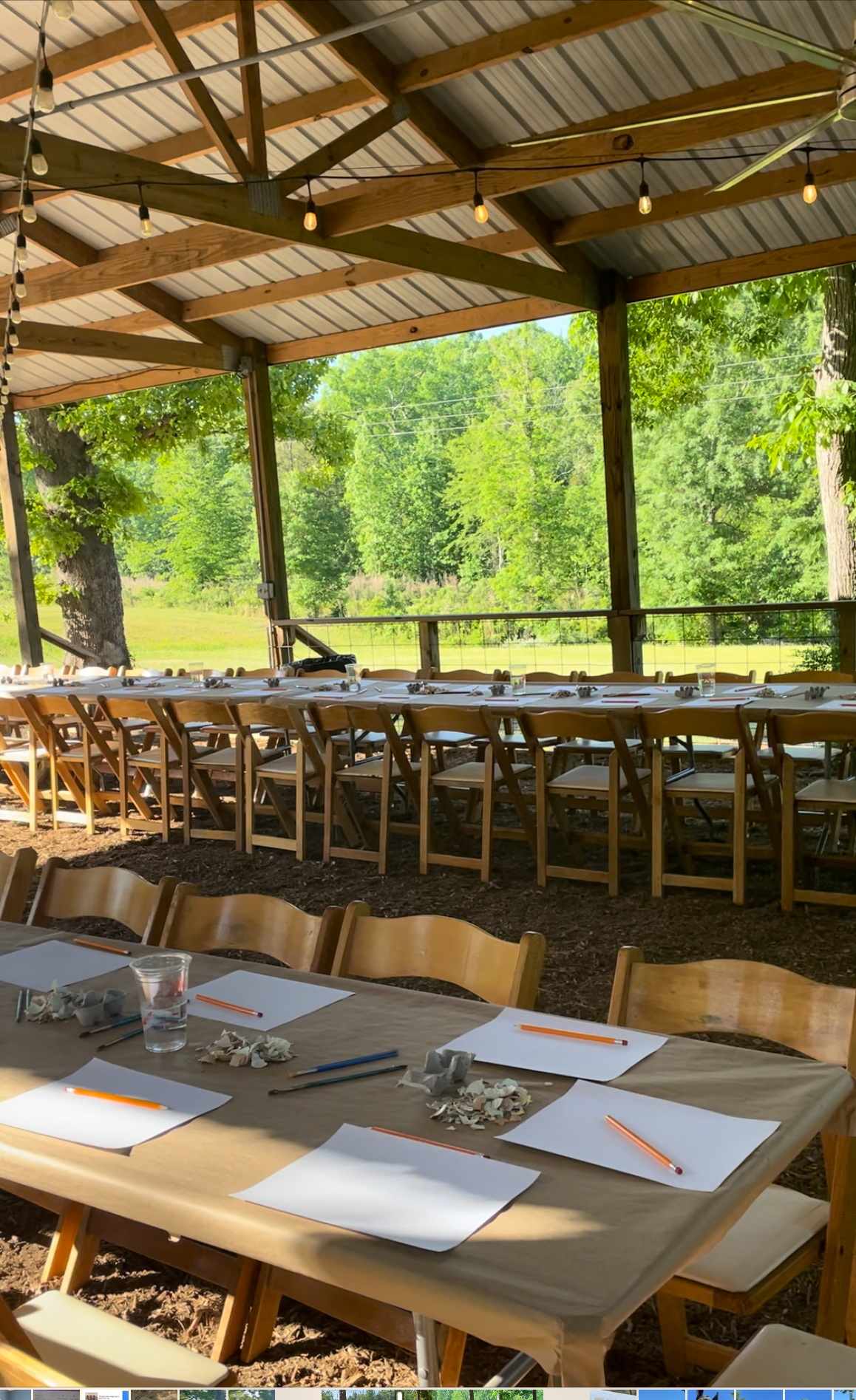
- Use of our 1,200 sq ft. covered pavilion and grassy areas for a picnic lunch. Bring packed lunches; on-site food service is not available.
- Time in the FARMstand play area, including climbing tires, tire swings, slides, sensory bins and other outdoor play.
Teachers & Chaperones:
Teachers and chaperones attend free and help supervise students throughout the visit. We recommend one adult for every 15 younger children or 25 older children.
Parking:
A $125 parking attendant fee applies to groups whose students arrive in individual vehicles or whose accompanying adults bring more than 25 vehicles, even if students arrive by bus.
Transportation plans and estimated vehicle counts are required when booking so any applicable parking fee can be included on your initial invoice. Please coordinate chaperone transportation in advance and encourage carpooling.
Seasonal Field Trips for Schools
MARCH through MAY: Spring on The FARM ($12 per child)
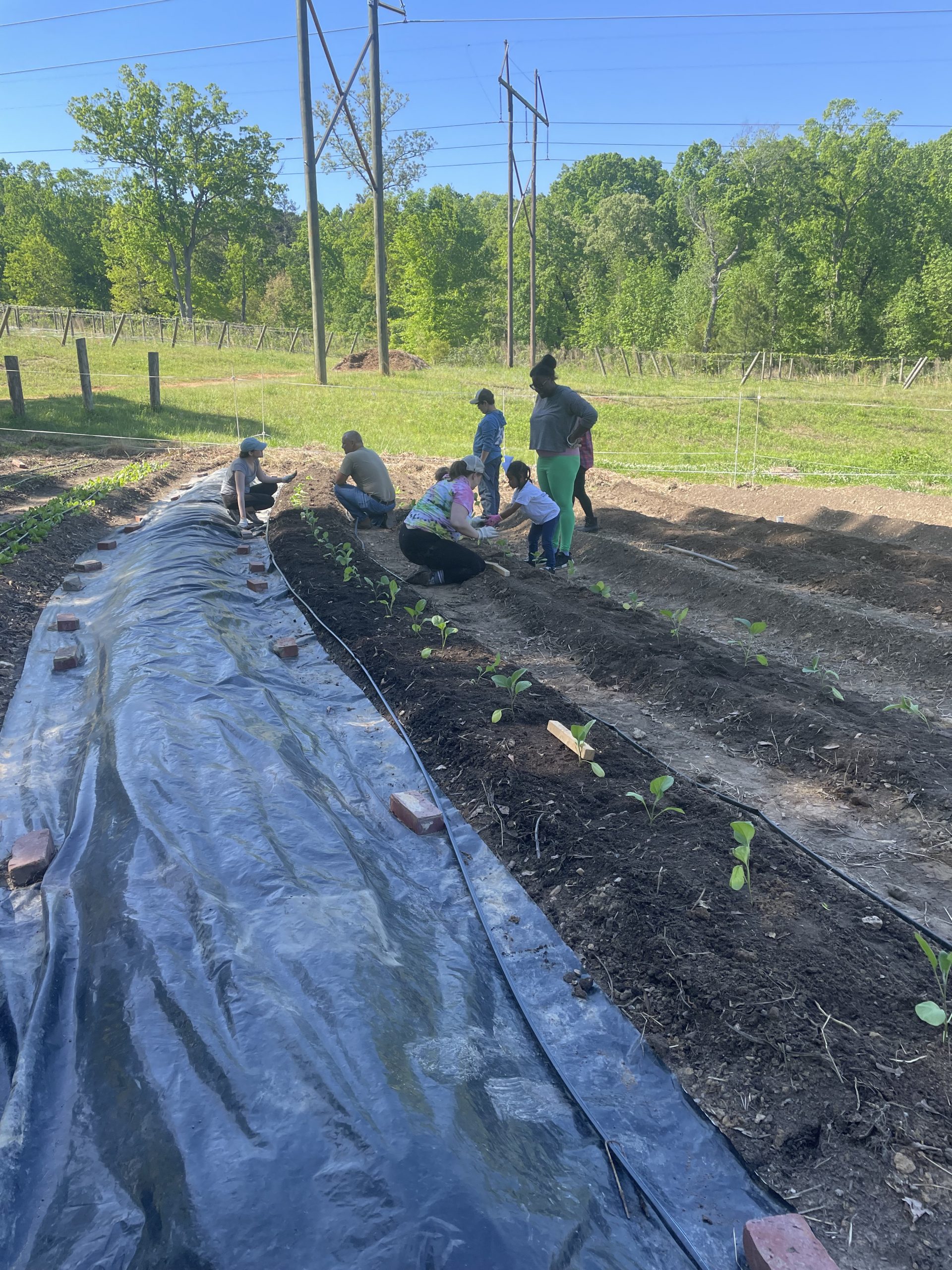
Children participate in an array of activities including planting in the greenhouse and transplanting in the fields. This is the time of year that poultry is hatching & children also learn about the lifecycle of chickens, all about eggs & it includes a chicken and turkey interaction where children interact and feed the poultry. Crafts are centered around spring on the farm based on age.
JUNE: Berry U-Pick ($14 per child)
Children are offered u-pick opportunities and we organize other crafts and activities around this theme. Includes life-cycle of berry plants, pollinator game & a berry themed craft based on age.
JULY & AUGUST: Summer on The FARM ($12 per child)
Children participate in an array of activities including planting, harvesting, and livestock interaction (currently chickens and turkeys). Crafts and activities are organized around this theme. Includes vegetable stamping, seed germination, transplanting/direct sow & more.
AUGUST 7 - SEPTEMBER 19: Muscadine U-Pick ($14 per child)
Children are offered u-pick opportunities and we organize crafts and activities around this theme. Includes life-cycle of grapes, pollinator game & preserving activity.
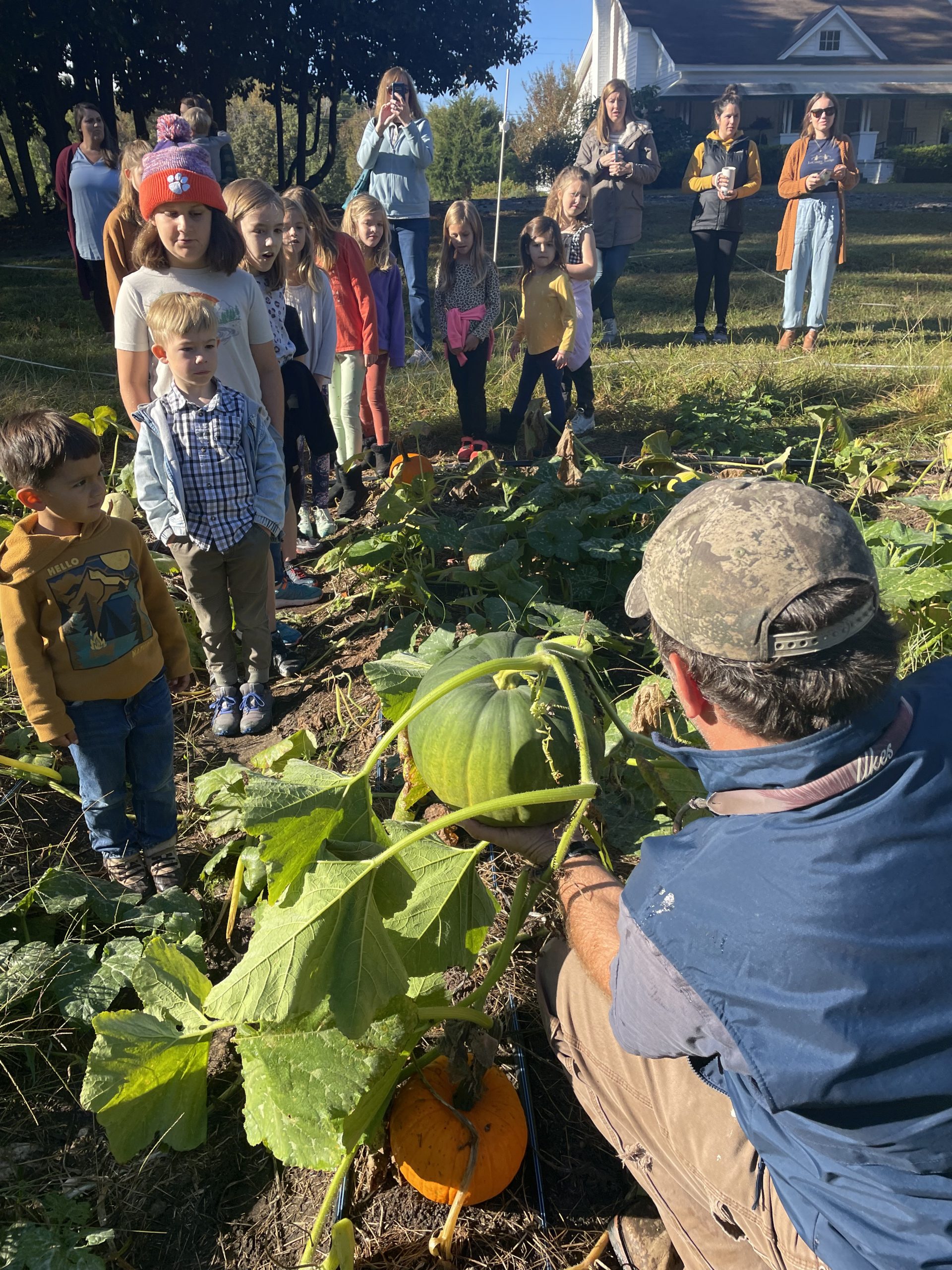
SEPTEMBER 22 - OCTOBER 31: Pumpkin Patch ($12 per child)
As Lexington County's only locally grown pumpkin patch, The FARM 1780 is the best hands-on learning location for pumpkin lifecycles. Field trip includes seeing first-hand different life-cycles of a pumpkin in the field, picking their own pie pumpkin, pumpkin painting activity & learning about (& enjoying) farm grown popcorn.
OFFERED YEAR ROUND: Historic Crops of SC ($10 per child)
This is a great field trip for middle and high school aged kids. As an original land grant property that dates back to the 1780s, The FARM is a perfect hands-on location for kids to see SC's rich agricultural history in action. Children will see historical crops - indigo, rice, tobacco, cotton, and tobacco at different stages and learn more about their economic impact in the state throughout history.
SC Academic & Performance Indicators covered during field trips on The FARM:
Kindergarten
K-LS1-1: Use observations to describe patterns of what plants and animals (including humans) need to survive.
K-ESS3-1: Use a model to represent the relationship between the needs of different plants or animals (including humans) and the places they live.
K-ESS3-3: Obtain and communicate information to define problems related to human impact on the local environment.
1st Grade
1-LS1-1: Use materials to design a solution to a human problem by mimicking how plants and/or animals use their external parts to help them survive, grow, and meet their needs.
1-LS1-2: Obtain information from multiple sources to determine patterns in parent and offspring behavior that help offspring survive.
1-LS3-1: Make observations to support an evidence-based claim that most young are like, but not exactly like, their parents.
2nd Grade
2-PS1-4: Construct an argument with evidence that some changes caused by heating or cooling can be reversed and some cannot.
2-LS2-1: Plan and conduct an investigation to determine what plants need to grow.
2-LS2-2: Develop a simple model that mimics the function of an animal in dispersing seeds or pollinating plants.
2-LS4-1: Make observations of plants and animals to compare patterns of diversity within different habitats.
3rd Grade
3-LS1-1: Develop and use models to describe how organisms change in predictable patterns during their unique and diverse life cycles.
3-LS12-1: Construct an argument that some animals form groups that help members survive.
3-LS3-1: Analyze and interpret data to provide evidence that plants and animals have inherited traits that vary within a group of similar organisms.
3-LS3-2: Use evidence to support the explanation that traits can be influenced by the environment.
3-LS4-2: Use evidence to construct an explanation for how the variations in traits among individuals of the same species may provide advantages in surviving and producing offspring.
4th Grade
4-LS1-1: Argue how internal and external structures work together to support plant and animal life.
4-LS1-2: Model how animals sense information, process it, and respond.
4-ESS2-1: Gather evidence of weathering or erosion.
5th Grade
5-LS1-1: Support a claim that plants get growth materials mainly from air and water.
5-LS2-1: Model matter moving through organisms and their environment.
5-PS3-1: Model how energy in animals’ food originated in sunlight.
5-ESS2-1: Model interactions among Earth’s land, water, air, and living systems.
5-ESS3-1: Evaluate solutions for protecting natural resources and the environment.

We are currently booking through Spring 2027.
To book your field trip, complete the form below.
A $200 non-refundable retainer is due to book your field trip (the final balance and attendee count is due 48-hours before your field trip). The $200 payment is applied to your final invoice.
Your booking is not confirmed until you receive an invoice & pay the deposit, which you will receive from us via email. We do offer reschedules based on weather with 48-hours notice. No cancelations.


